Rent every year to ~1,000 landowner households, Rs 1,000-a-day wages for ~440 full-time and ~1,500 seasonal workers, and a 30% stake for the farmers' cooperative.
We measure: Households paid rent on time; wages paid; cooperative distributions.
Lumpek Business Plan 2083/84 · Rs 25 crore equity round open
Fearless from the Source.मुहानदेखि नै निडर
Kali Coffee turns Nepal's oldest coffee district into a shade-grown, traceable Himalayan Arabica origin, financed as one bankable company and owned in part by the farmers who grow it. The first 10,000 ropani are at Lumpek Village, Gulmi.
Returns are Scenario 2 (base case) projections from the Kali Coffee Lumpek Business Plan 2083/84 and its financial model (constant 2083 prices). They depend on yield, price, lease terms and financing, and are not guaranteed.
ScrollThe vision & political backing
Coffee came to Nepal in 1938, when Hira Giri planted it in Aapchaur, Gulmi. Coffee cultivation in Nepal is only 12 years from its hundredth year. Celebrating that centenary in today's fragile state would be deeply unfortunate for coming generations.
12 years to the centenary
“Thinking mindset and scalability have been our bottleneck for nearly a century. Now we start with an open mindset that can think big.”
Federal Parliament of Nepal · House of Representatives
“We, the 11 undersigned Members of Parliament, will facilitate policy hurdles, cooperate, extend support, remove legal obstacles, and resolve every kind of problem arising at the government level.”
We will open the path for investment starting with piloting of minimum 10,000 ropani in each constituency, pacing towards our milestone of being one of the premium quality coffee exporters in the global market.
Joint Statement on Establishing a Billion+ USD Nepalese Coffee Market
Copied for support to
Annual coffee production, tonnes. Nepal's bar is real: 501 t is 0.03% of Vietnam's harvest.
Source: Joint Statement of 11 MPs, peer comparison table.
Share of coffee potential in use
0.3%
3,659 ha cultivated of ~1.1 million ha suitable. 99.7% of the market is untouched.
$16bn
Value-chain potential at Rs 1 lakh per ropani
$32bn
With the multi-layer crop model (×2)
The pilot phase alone, 110,000 ropani (0.5% of national potential), is projected in the statement to earn Rs 22 arba a year within 5–7 years across the whole value chain.
The proven model
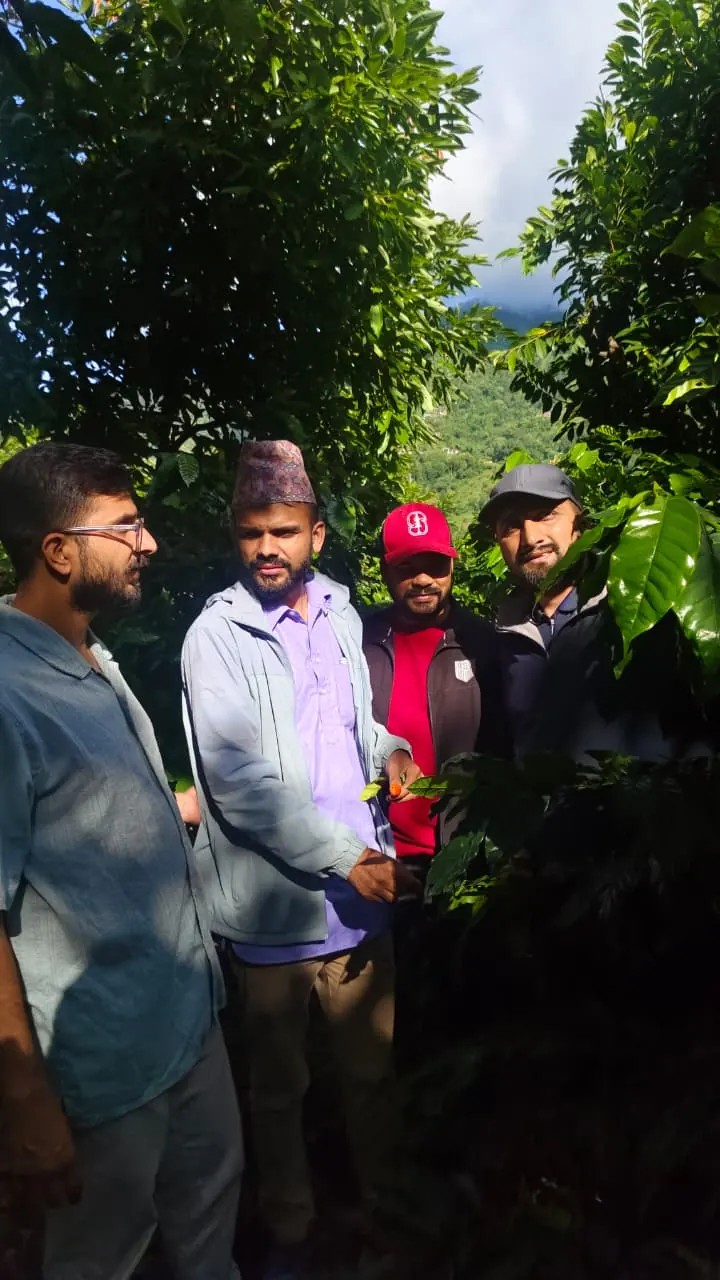
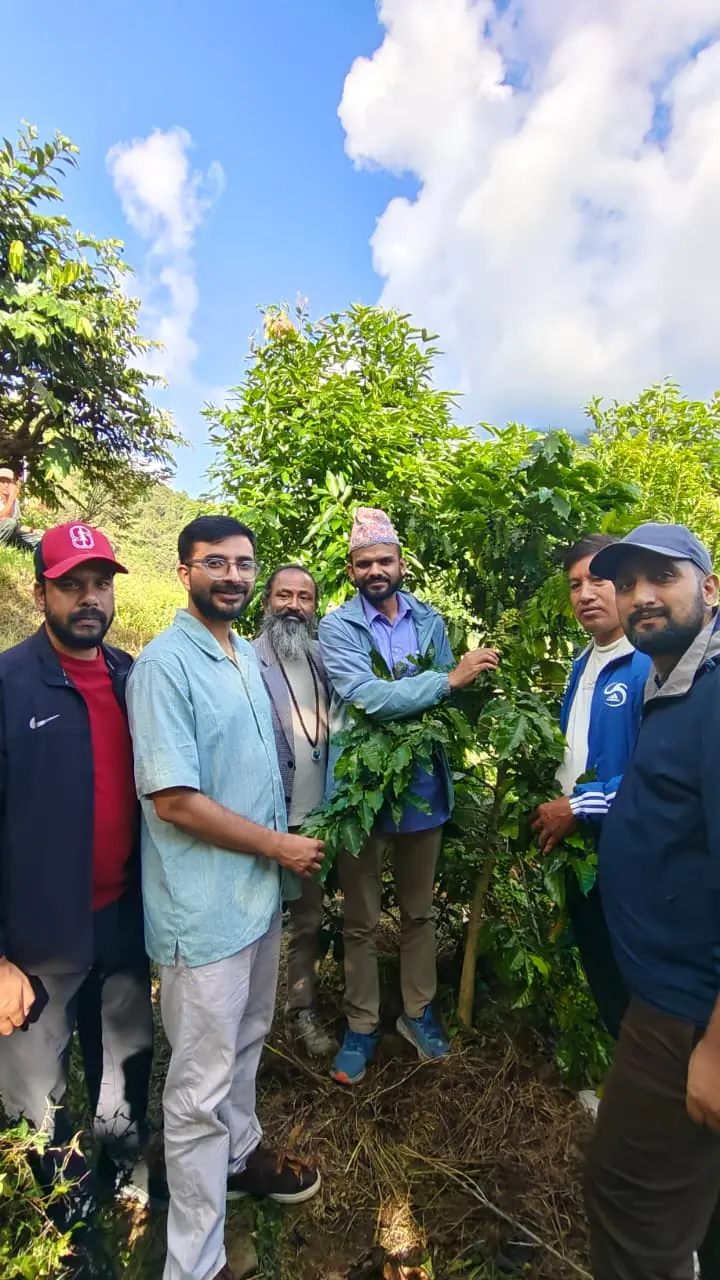
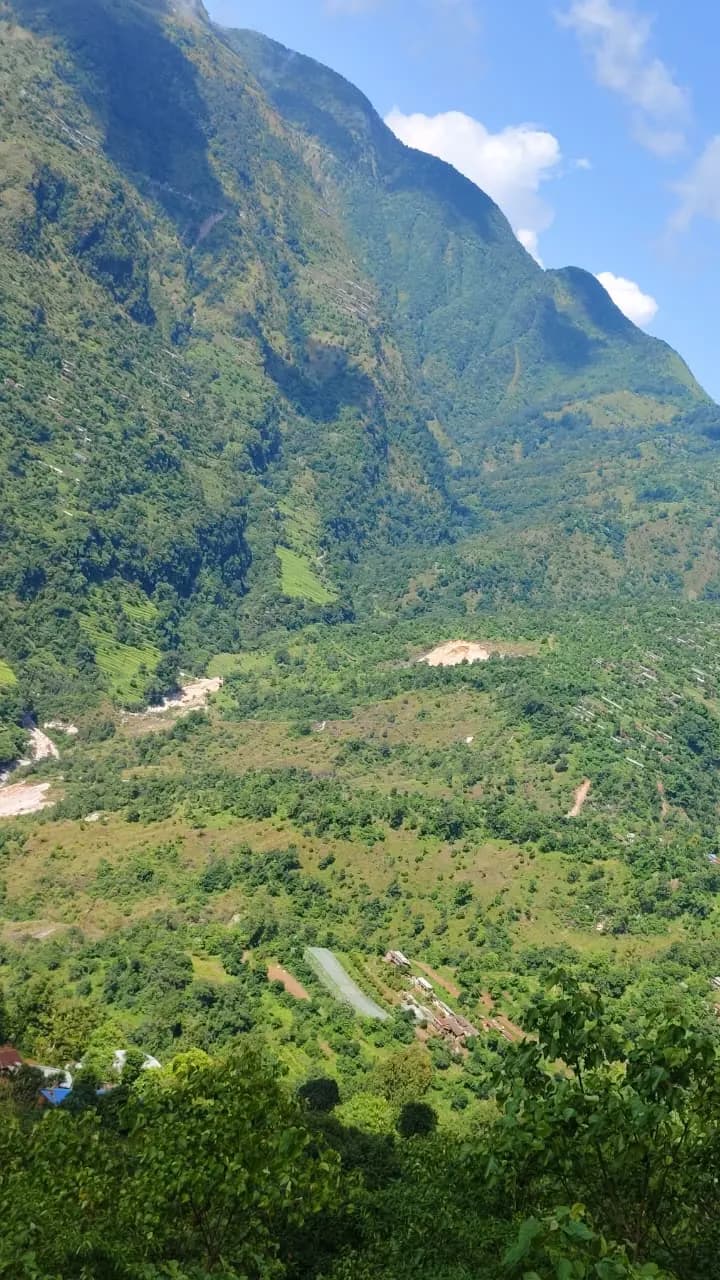
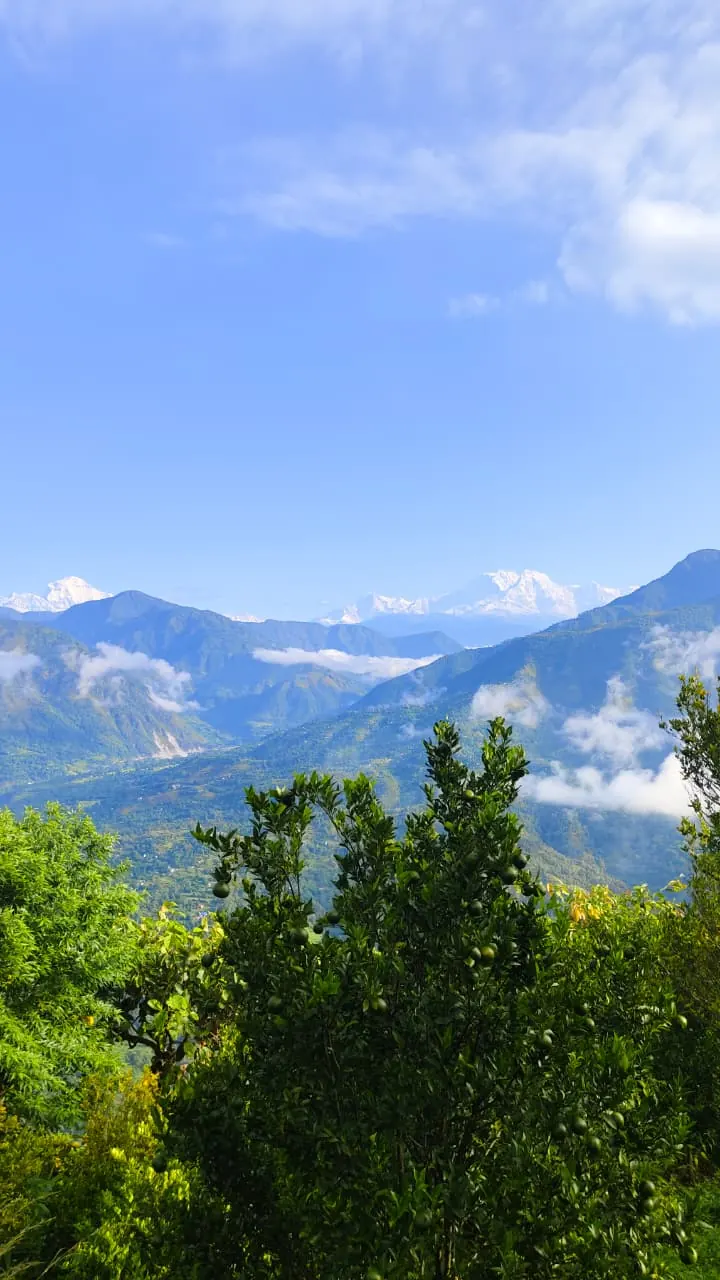
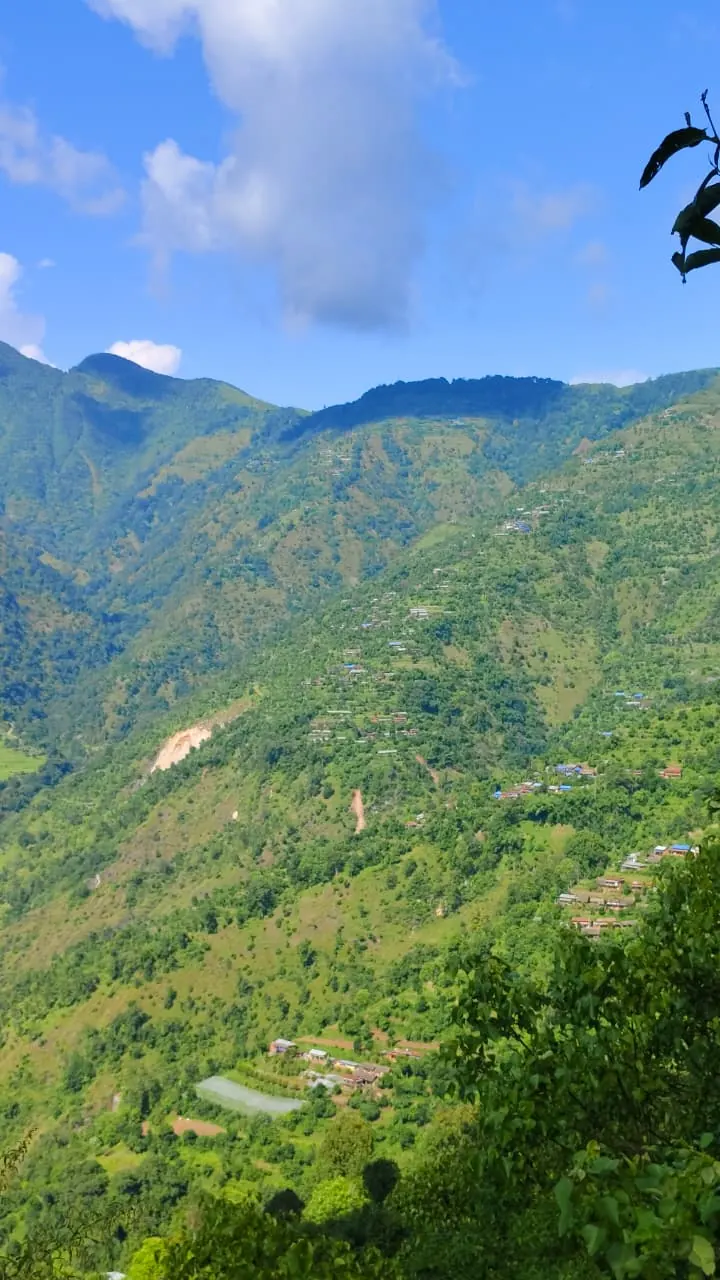
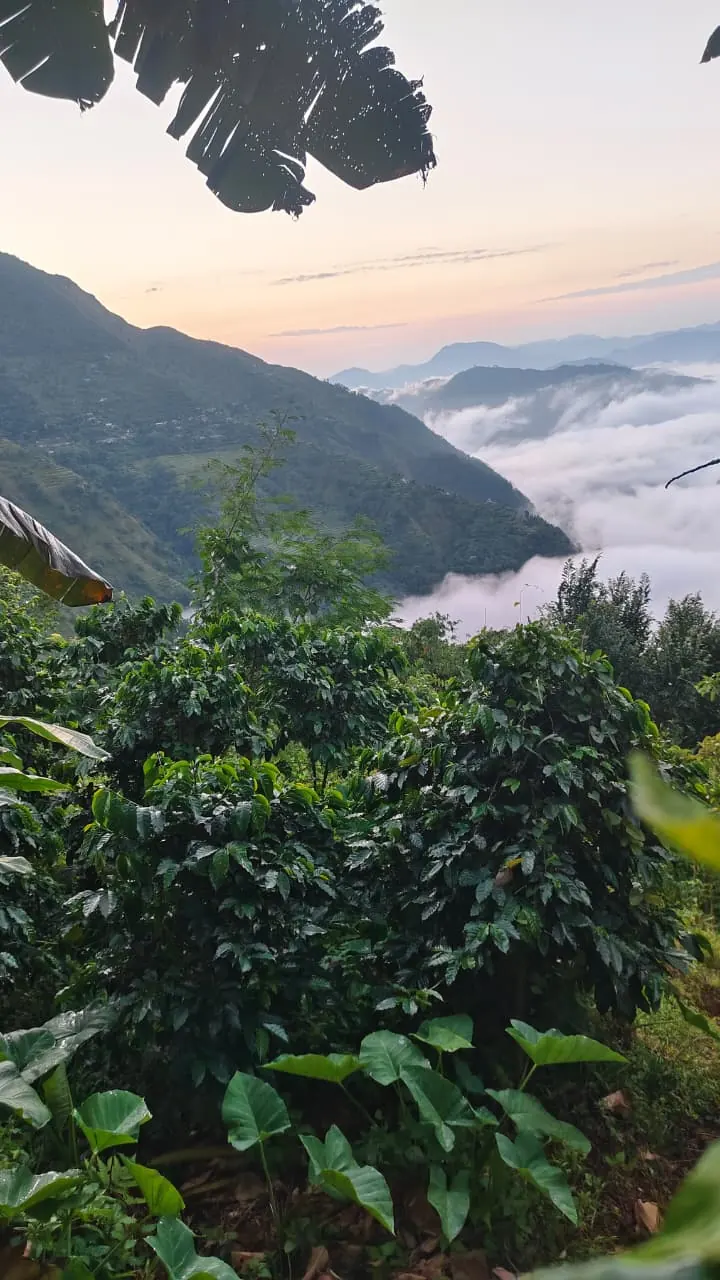
Thulo Lumpek, Satyawati RM, Gulmi · ~1,400 m · drains to the Kaligandaki
40
women already working the coffee
~500
ropani under coffee today
~50,000
coffee plants, 9 years of work
10,000
ropani: the investment case
First 2,500 plants go in on family land.
Flood and landslide destroy much of the planting. The group replants.
2,000–5,000 new plants a year, through shared group labour (parma).
~20,000 new seedlings in one season. The model is proven.
Farmer & community impact
Into local hands every year
Rs 25 crore
Scenario 2 at maturity, Lumpek only, plus the cooperative's 30% share of profits. Multiply by eleven for the programme.
Source: Lumpek Business Plan, Figure 11.1.
40
women master leaders, the “diamonds” of the Lumpek group, run the field system.
Each looks after 250 ropani (about 25,000 plants), with a career path to area and district lead.
~1,000
landowner households paid rent, about Rs 15,000 a year each
~1,000
people a day at peak planting, in crews of 20 with two days off a week
~25
women-run satellite nurseries earning about Rs 12 lakh each
~440
full-time jobs at maturity, plus ~1,500 seasonal in year one
3% of every rupee of revenue, about Rs 5.3 crore a year at maturity, governed by a ward-level committee with a yearly public hearing and social audit.
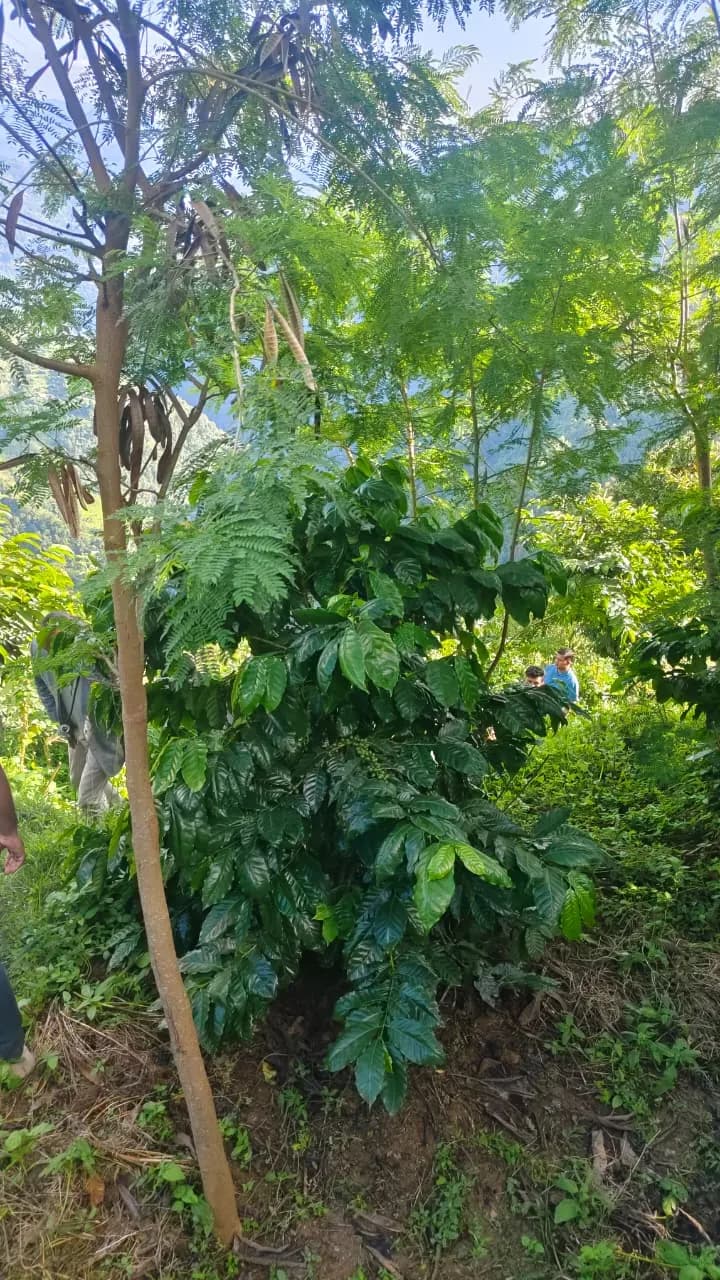
A five-floor agroforest instead of a monoculture. The soil, the canopy and the water all end up better than before.
1,000 t
biochar in the planting pits, made from cleared lantana and bush
4,000 t
hot compost from 2,000 field hubs; nothing burnt in the open
50–60%
shade canopy kept; no clear-felling of useful trees
0
synthetic fertiliser or pesticide planned: de facto organic
Carbon upside, not in the base case: biochar removal credits (Puro.earth, Verra VM0044) and agroforestry carbon once production is measured and registered.
The same 10,000 ropani that earn investors a return also raise rural incomes, grow food, put women in charge of the field system and produce coffee responsibly.
Rent every year to ~1,000 landowner households, Rs 1,000-a-day wages for ~440 full-time and ~1,500 seasonal workers, and a 30% stake for the farmers' cooperative.
We measure: Households paid rent on time; wages paid; cooperative distributions.
Five-floor agroforestry grows banana, fruit, cardamom, chilli, ginger, turmeric and yam beside the coffee, on land that is now fallow or bush.
We measure: Food crops harvested per ropani; household food security.
Forty women already work the Lumpek coffee. Women master leaders and ~25 women-run nurseries lead the field system, with paid roles and training.
We measure: Women in paid and leadership roles; nursery income.
No burning and no synthetic inputs planned; pulp composted; eco-pulpers cut processing water by about 80%; every lot traceable from cooperative to cup.
We measure: Water per kg of coffee; waste composted; share of traceable lots.
Regenerative agroforestry
Floor 2 · Main floor
Core crop · 100 plants per ropani, ~105 kg green coffee
Crops: Arabica coffee. Climbers on the shade trees add black pepper, passion fruit.
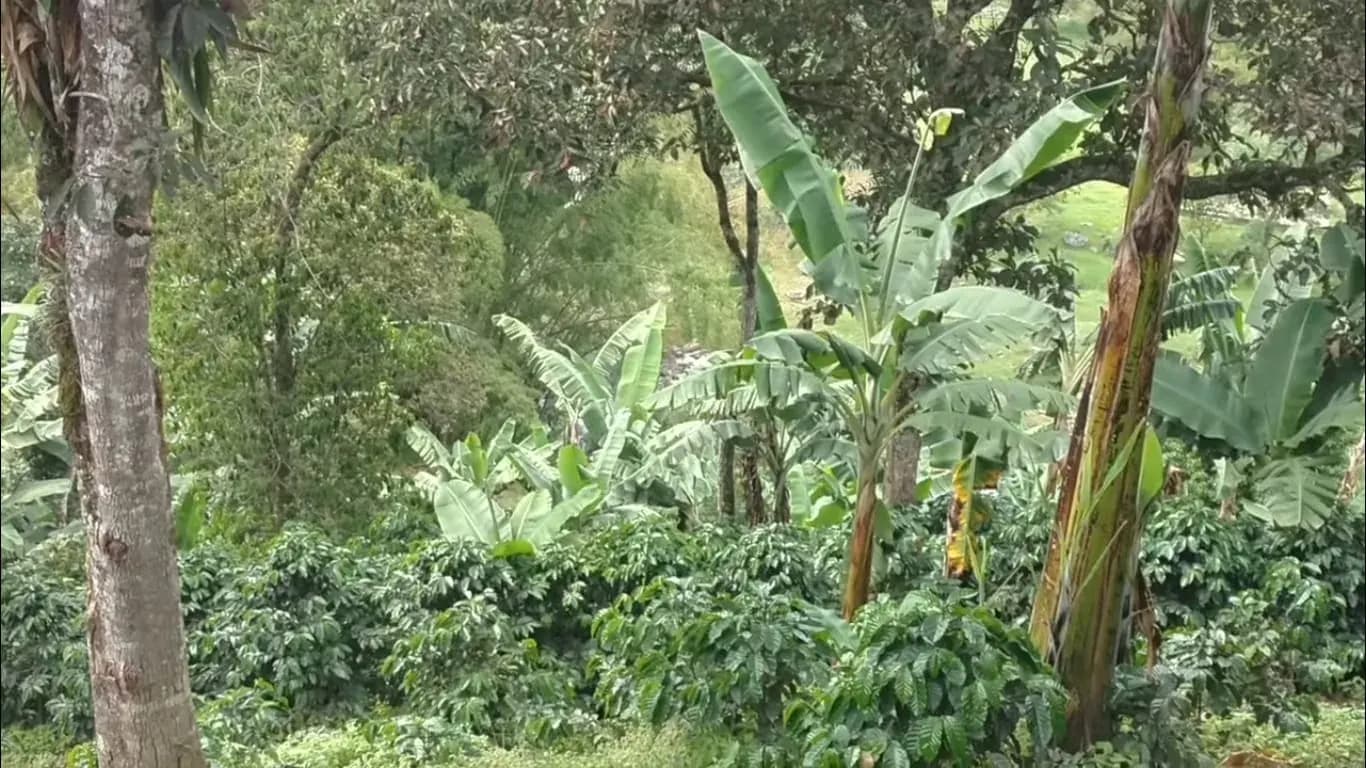
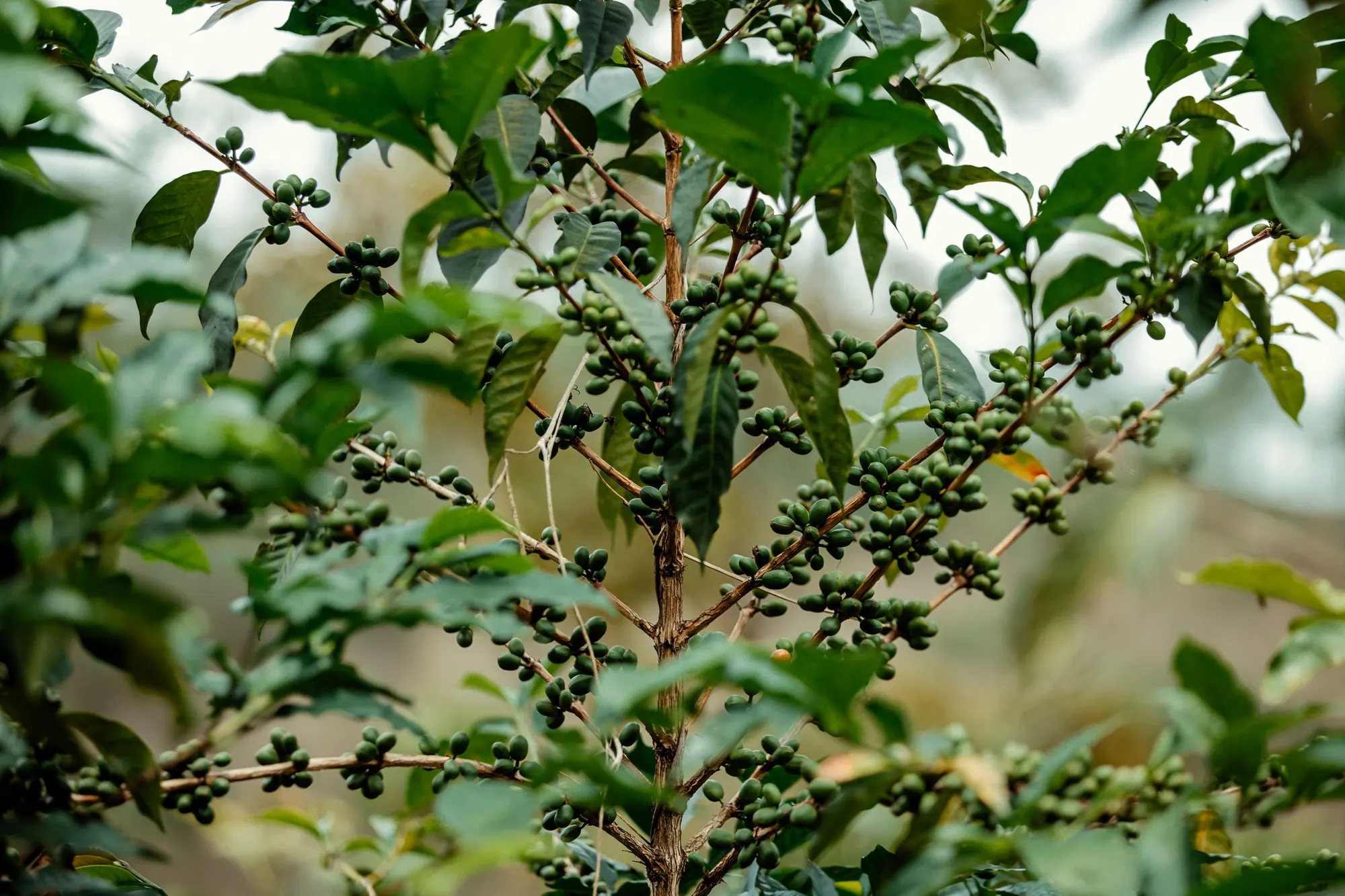
Gross income per ropani a year at full bearing: Rs 219,680 in all. Coffee at Scenario 2 earns Rs 168,000; the other floors and the climbers add about Rs 51,680. The cash flow books only 30% of their net margin (about Rs 9,900 a ropani) until local trials prove the yields.
Source: Kali Coffee financial model, Multilayer sheet; coffee at Scenario 2. Gross, before costs.
From seed to export
Mangsir 2083
1,200 kg hand-picked from the best 8–10-year-old Lumpek bushes.
Magh 2083
The critical path: a month lost here is a month lost in planting.
Kartik 2084
25-year Bhumi Bank leases signed; bank consortium drawn.
Mangsir–Falgun 2084
~1,000 people a day in crews of 20; 10 lakh pits.
Falgun–Asar 2084/85
10 lakh seedlings, with banana shade and temporary nets.
2087/88
Village wet mills and the central dry mill come online.
2090/91
~1,050 t of green coffee a year, about twice Nepal's 2024 output.
Share of mature yield, by year after planting. Hover for values.
Scenario 2 assumes 7 kg of cherry per plant, about 2.1 t of green coffee per hectare. Nepal's national average today is 0.19 t/ha.
In Scenario 2, Lumpek alone grows about twice Nepal's entire 2024 production. Source: Lumpek Business Plan, chapter 10.
Processing, GI brand & market
1Field
Selective red-cherry picking; same-day carry by doko or mule
2Village wet mill
10 eco-pulpers; ferment 24–36 h; dry on raised beds
3Central dry mill
Hull, grade, density sort; cupping lab with a Q-grader
4Domestic roasters
Kathmandu, Pokhara, Butwal: replaces ~450 t of imports
5Export
Kolkata port → Europe, Japan, Korea, Australia
Quality is decided at every step between the bush and the roaster. Every lot is cupped by a Q-grader; 80+ points to carry the name.
 1
Green cherries ripen slowly at altitude
 2
Only red cherries are hand-picked
 3
A ripe cluster ready for the mill
 4
Pulping the same day as picking
 5
Drying parchment on raised beds
 6
Turning parchment on open-air beds
 7
Winnowing graded green coffee
 8
Roasting for domestic cafés
 9
Roasted and ready for the cup
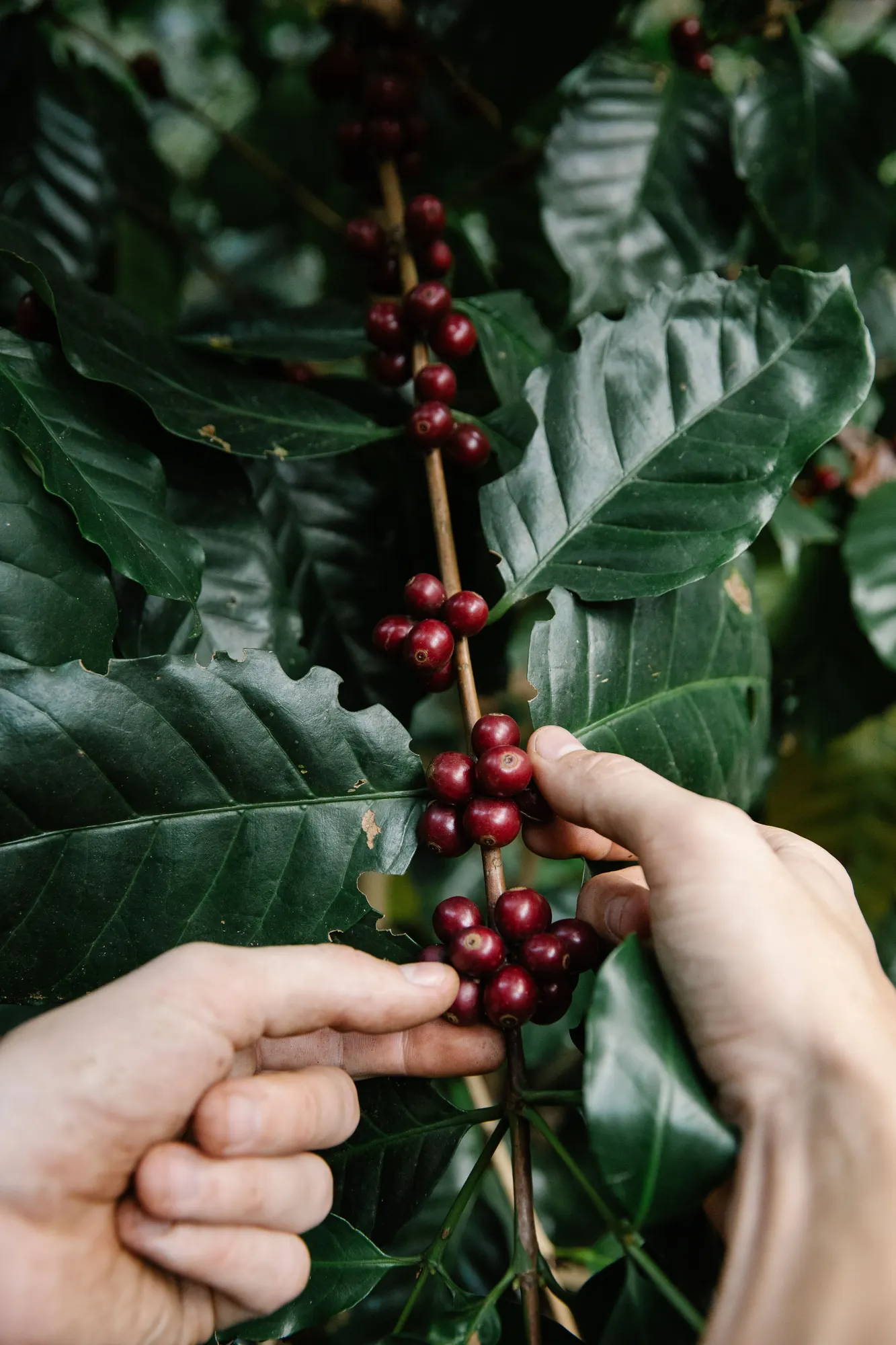
Images are illustrative of the processes Kali Coffee will use; they were not taken at the project sites.
Base-case realised price per kg of green coffee
Rs 1,600/kg is the Scenario 2 price; Nepal's specialty exports earned about US$12.80/kg in FY2022/23. Source: Kali Coffee financial model.
Future geographical-indication specification
Nepal has no GI law yet. The route: register “Kali Coffee” as a collective trademark now, owned by a producers' association for the whole watershed, while the 11 MPs table a GI bill.
The Lumpek investment case
Lease
25-year Bhumi Bank leases; rent paid every year
Grow
Five-floor shade agroforestry, 100 plants per ropani
Process
Village wet mills, central dry mill, Q-grader lab
Sell
Domestic roasters first, then export lots
Share
Rent, wages, 30% cooperative stake, 3% community fund
Real post-tax project IRR and real equity IRR, by scenario.
| Scenario | 1 · Pessimistic | 2 · Base | 3 · Optimistic |
|---|---|---|---|
| Yield (kg cherry/plant) | 5 | 7 | 10 |
| Green price (Rs/kg) | 1,200 | 1,600 | 2,100 |
| Green coffee at maturity | 750 t | 1,050 t | 1,500 t |
| Mature revenue (Rs cr) | 99.9 | 177.9 | 324.9 |
| Mature EBITDA (Rs cr) | 55.0 | 118.4 | 241.8 |
| Project IRR (real, post-tax) | 28.9% | 45.9% | 66.9% |
| Equity IRR (real) | 41.4% | 64.2% | 88.3% |
| NPV at 8% (Rs cr) | 273.7 | 682.0 | 1,475.6 |
| Payback | Year 7 | Year 5 | Year 5 |
| Minimum DSCR | 4.3× | 9.8× | 21.7× |
| Peak funding (Rs cr) | 74.5 | 71.3 | 65.6 |
Source: Kali Coffee 10,000-ropani financial model (Excel), scenario switch 1 · 2 · 3; real 2083 prices, 8% real discount rate.
Capital cost, Rs crore: Rs 61.6 crore (~US$4.6 m) in total, about Rs 61,600 per ropani, including a 20% contingency.
Source: Lumpek Business Plan, Figure 10.2.
Peak funding in Scenario 2: one rupee in ten from grants, more than half from a bank loan, and Rs 25 crore of equity from the Gulmeli diaspora and domestic investors.
What the bank should require
Signed letters of intent from at least two domestic roasters and one export buyer; registered 25-year leases; insurance on trees, mills and vehicles assigned to the lender; a six-month debt-service reserve; and audited accounts from a single incorporated borrower.
Revenue (coffee plus intercrop margin) and EBITDA, Rs crore a year. Hover for values.
Key assumptions, Scenario 2
Sensitivity of the Scenario 2 pre-tax IRR around its 48.5% base.
Source: Lumpek Business Plan, Figure 10.5.
Caution
Yield and price matter more than any other number. A 30% yield shortfall cuts the pre-tax IRR from 48.5% to 39.2%, and Nepal's national-average yield brings it down to about 23%.
The plan's agronomy, altitude rules and a land-rent floor near Rs 1,500 per ropani exist to protect the return.
A diaspora investment company puts in all the cash equity for 70%. The farmers' cooperative holds 30% free-carried, earned by assigning the Bhumi Bank leases, its nursery know-how and its labour. Investor IRR after the cooperative's carried share is 54.4% in Scenario 2. Shares are Rs 100; open tickets start at Rs 1 lakh.
Farmers' no-loss guarantees
Returns are Scenario 2 (base case) projections from the Kali Coffee Lumpek Business Plan 2083/84 and its financial model (constant 2083 prices). They depend on yield, price, lease terms and financing, and are not guaranteed.
Invest with us · three packages
Package 01 · Founder
Where the river begins.
Rs 1 crore
100,000 shares at Rs 100
Ownership
4.0% of the investment company: about 2.8% of Kali Coffee SPV.
Paid in three calls: Rs 32 lakh (2083/84), Rs 43 lakh (2084/85), Rs 25 lakh (2086/87).
Returns
Investor IRR 54.4% (Scenario 2); 34.2% if yields disappoint. Capital back by year 5 (2088/89).
Net cash gain by 2093/94
~Rs 11.2 croreScenario 2
~Rs 3.7 croreScenario 1
Privileges
Your share of the impact
Package 02 · Partner
Where the streams become one.
Rs 50 lakh
50,000 shares at Rs 100
Ownership
2.0% of the investment company: about 1.4% of Kali Coffee SPV.
Paid in three calls: Rs 16 lakh, Rs 21.5 lakh and Rs 12.5 lakh.
Returns
Investor IRR 54.4% (Scenario 2); 34.2% if yields disappoint. Capital back by year 5 (2088/89).
Net cash gain by 2093/94
~Rs 5.6 croreScenario 2
~Rs 1.9 croreScenario 1
Privileges
Your share of the impact
Package 03 · Member
Every river is made of them.
Rs 20 lakh
20,000 shares at Rs 100
Ownership
0.8% of the investment company: about 0.56% of Kali Coffee SPV.
Paid in three calls: Rs 6.4 lakh, Rs 8.6 lakh and Rs 5 lakh.
Returns
Investor IRR 54.4% (Scenario 2); 34.2% if yields disappoint. Capital back by year 5 (2088/89).
Net cash gain by 2093/94
~Rs 2.2 croreScenario 2
~Rs 74 lakhScenario 1
Privileges
Your share of the impact
Not ready for a package? Open shares stay available to the wider diaspora from Rs 1 lakh at Rs 100 a share.
Scroll sideways on small screens
| Term | Source | Confluence | Tributary |
|---|---|---|---|
| Ticket | Rs 1 crore | Rs 50 lakh | Rs 20 lakh |
| Shares at Rs 100 | 100,000 | 50,000 | 20,000 |
| Stake in the investment company | 4.0% | 2.0% | 0.8% |
| Look-through stake in Kali Coffee SPV | ~2.8% | ~1.4% | ~0.56% |
| Investor IRR, Scenario 1 · 2 · 3 | 34.2% · 54.4% · 76.3% | 34.2% · 54.4% · 76.3% | 34.2% · 54.4% · 76.3% |
| Net cash gain by 2093/94, Scenario 2 | ~Rs 11.2 crore | ~Rs 5.6 crore | ~Rs 2.2 crore |
| Net cash gain by 2093/94, Scenario 1 | ~Rs 3.7 crore | ~Rs 1.9 crore | ~Rs 74 lakh |
| Free farm stay each year | 14 nights, 4 guests | 7 nights, 2 guests | 3 nights, 2 guests |
| Roasted coffee each year | 12 kg + 50 gift bags | 6 kg + 20 gift bags | 3 kg |
| Recognition | Named 10-ropani terrace; founders' wall | Terrace marker | QR-traced lot |
| Voice | Advisory Council seat | Votes for the Council | AGM vote |
| Land brought into production | 140 ropani | 70 ropani | 28 ropani |
| Best for | Family offices, diaspora groups and impact funds who want a hand in the founding. | Professionals and business owners in Nepal and abroad. | First-time investors and NRN families who want a real stake in their home district. |
Returns from the Kali Coffee 10,000-ropani financial model: investor cash flow after the cooperative's carried 30%, real 2083 prices. Impact is each ticket's share of the Rs 71.3 crore project funding. Indicative terms, to be fixed in the shareholder agreement.
Cumulative, after repaying capital, Scenario 2. Multiply by your ticket in lakh: Source ×100, Confluence ×50, Tributary ×20.
Y0 = 2083/84. Capital is back in year 5 (2088/89). In Scenario 1 the same Rs 1 lakh ends at about Rs 3.7 lakh, with capital back in year 6. Source: Kali Coffee financial model, investor cash flow.
Please read
Returns are projections from the Kali Coffee financial model, not promises. Scenario 2 assumes 7 kg of cherry a plant, far above Nepal's average today; Scenario 1 shows the effect of weaker yields and prices. An unlisted farm company carries a risk of loss, and investors resident abroad need Nepal's foreign-investment approval. Final terms will be set in the shareholder agreement.
The seven districts
Nursery start 2083/84 · first pilot, fully costed
Signatory MPs
Sagar Dhakal (Gulmi 1) · Govinda Panthi (Gulmi 2)
Suitable-area figures: Joint Statement of 11 MPs, Table 1. Map positions are district centroids; the river course is indicative.
This investment case covers Lumpek only. Two further sites are being prepared on the same model, sharing its brand, seed, nurseries, dry mill and buyers. Their figures are indicative until each has its own DPR.
A · This investment case
10,000 ropani
Thulo Lumpek, Satyawati RM, Gulmi
Full investment case
B · Next site
15,000 ropani
Kaligandaki RM, Gulmi · 10,013 ropani GIS-mapped
GIS-mapped; DPR next
C · Satellite block
5,000 ropani
Modi RM, Parbat
Scoping; DPR next
Sites B and C are scaled pro rata from the Lumpek model's Scenario 2, before site surveys. ‘+’ marks where a smaller site will cost more per ropani.
“By 2100 BS, a billion-dollar Kaligandaki coffee origin: 110,000 ropani across eleven constituencies, a protected Geographical Indication, and a centenary of Nepali coffee celebrated in strength rather than fragility.”
Investor portal & document hub
Kali Coffee data room
Secure connectionPartner with Kali Coffee
